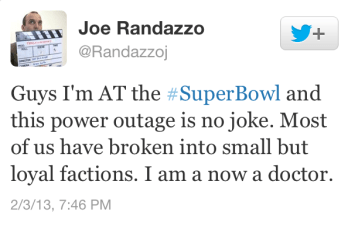
In Ivan Hoffman’s “Leverage in Contract and Other Negotiations,” Hoffman defines “leverage” in the first line of the article:

The term “leverage” refers to the principle of using a small advantage (or in negotiating terms, even merely a perceived advantage) to gain a much larger benefit.

In Joe Flacco’s upcoming contract negotiations with the Baltimore Ravens, he has more than a “small” advantage. An impressive playoff run and a high-caliber Super Bowl performance has given Flacco more leverage than arguably any other player in the NFL this offseason. So what should the Ravens do with Joe Flacco? Well, here are their options:

  1. Sign him to a long-term contract
  2. Franchise tag him with an “exclusive” tag
  3. Franchise tag him with a “non-exclusive” tag
  4. Trade him
  5. Cut him

Okay— neither number 4 or 5 is an option so go ahead and throw them out. Realistically, the Ravens will either sign him to a long-term deal or tag him. But which option is the wisest for the Ravens?

The popular answer seems to be the long-term contract with a reluctant, “he deserves it.”

…does he?

The proponents of the Ravens giving Flacco a long-term deal consistently cite Flacco’s win-loss record, Super Bowl victory, and his impressive playoff run.

It astonishes me how often commentators, analysts, and writers refer to win-loss records as a quarterback’s record. During his contract negotiations with the Lions, I guarantee you never heard the Lions say, “Barry Sanders was 5-11 as a starter with the Lions last year, so we don’t think he’s worth that much.” I understand the quarterback position is the most valuable position on an NFL team, especially in today’s pass-happy league. But to attribute 100% of the credit to the quarterback is absurd. If you asked anyone citing Flacco’s win-loss record as a reason why he should receive a long-term deal if they believed he was 100% responsible for winning or losing every game, they’d all tell you no. Yet they’ll still cite it in a matter-of-fact tone as strong evidence as to why the Ravens should give him the contract?

Watch all of the Ravens’ playoff games again (I have with the NFL’s Game Rewind, which is a great deal by the way) and you’ll see how much happened out of Joe’s control that contributed his performance. Obviously this applies to every quarterback, but I’d say it happens for Joe Flacco more so than most quarterbacks. Flacco is the beneficiary of a lot of “high-point” grabs by the big receivers he has in Torrey Smith and Anquan Boldin. He also benefits from great playmakers in the open field, such as Jacoby Jones and Ray Rice.

For instance, in week 12 the Ravens were down 10 to 13 to the Chargers, and on 4th and 29 with 1:50 left in the 4th quarter, Joe Flacco dumped the ball off to Ray Rice, and Ray did the rest. Hey diddle diddle, Ray Rice up the middle…

http://www.youtube.com/watch?v=er-VDKsZDho

One isolated instance is nowhere near enough proof to make the statement that “Flacco gets more help than most,” but I can’t prove that statement without forcing you to watch all of Flacco’s game film.

What I can provide you with is applicable stats. Here’s Joe Flacco’s career stats:

Year Comp. % Yards TD INT
2008 60.0% 2,971 14 12
2009 63.1% 3,613 21 12
2010 62.6% 3,622 25 10
2011 57.6% 3,610 20 12
2012 59.7% 3,817 22 10

And here’s his Total QBR and where his QBR ranked in the league for each year:

Year Total QBR Rank
2008 43.2 27th
2009 55.0 15th
2010 60.4 12th
2011 59.7 14th
2012 46.8 25th

Flacco’s agent says Flacco deserves “to be the highest-paid quarterback in the game[.]” And why wouldn’t he? His guy just won the Super Bowl.

But the “highest-paid quarterback” in the game is a fleeting title. As the quarterback position has increasingly gained value, there has been a revolving door of blockbuster deals. Currently, Drew Brees holds the title with a 5 year, $100 million contract.

So let’s say the Ravens make Flacco the highest-paid quarterback in the league with a 5 year, $101 million contract. What does that mean? Well, if it’s structured like Drew Brees’ contract, it’d look something like this:

Year Salary Bonus Cap Hit
2013 $3.0M $7.6M $10.6M
2014 $9.75M $7.85M $17.6M
2015 $10.75M $7.85M $18.6M
2016 $18.75M $7.85M $26.6M
2017 $19.75M $7.85M $27.6M

Brees was 33 when he signed his deal, while Flacco is only 28, so Flacco’s agent may argue that he deserves more guaranteed because he’s younger.

Either way, in this scenario Flacco would have the Ravens on the hook for a lot of money. If they backload the deal, the contract could contain clauses relieving them of contractual obligations if they released him prior to a certain date.

The Ravens’ alternative to committing themselves to a long-term deal such as this one is the franchise tag. The non-exclusive tag would cost the Ravens $14.6M, while the exclusive tag would cost the Ravens between $20M and $21M.

The non-exclusive tag would give other teams the ability to negotiate a contract with Flacco. If another team made an offer, the Ravens would have to match the offer to keep him. Additionally, if the Ravens choose not to match the offer, the team that signed Flacco would have to give Baltimore two 1st round picks as compensation. Yet the Ravens would need to match because there will be no one better than Flacco in free agency or the draft.

If they choose to tag Flacco with the exclusive tag, they will take a $20M+ salary cap hit in 2013. A hit they may not be able to afford.

So here we stand—a long term deal, an exclusive franchise tag, or a non-exclusive franchise tag—a true predicament.

If I was the General Manager of the Baltimore Ravens, here’s the choice I’d make:

The $14.6M non-exclusive franchise tag. 

Here’s why:

I’d gamble on the fact that I don’t believe any team would be willing to pay more than a $21M a year and give up two 1st round picks for a quarterback that hasn’t ranked in the top 10 in total QBR in his career. I say $21M and not $14.6M because if a team offers more than $14.6M, I can still match their offer and keep Joe. The only way it becomes a bad decision is if they offer more than the exclusive tag would have cost me ($20M-$21M). In my mind, here’s the two realistic scenarios:

Worst Case Scenario: A team makes an offer surpassing the $14.6M tag. In response, we would match the offer and negotiate the long-term deal. (The NFL CBA allows a team to negotiate and come to terms with their non-exclusive tagged player until the Tuesday following the 10th week of the NFL season.)

Best Case Scenario: No team is willing to match the $14.6M tag and give up two 1st round picks, so we have Joe Flacco under a 1 year contract for $14.6M. While the cap hit would be $4M more than the cap hit taken in the hypothetical long-term contract, it’s a good trade off for two reasons: (1) it delays the team from having to make a giant financial commitment to Flacco, and (2) it gives Flacco a season where he could possibly, and most likely would, lose a lot of the leverage he had going into the 2013 season.

Joe Flacco will likely play the 2013 NFL season without the likes of Ed Reed, Anquan Boldin, and others (including future Hall of Famer Ray Lewis). If he has a phenomenal year individually, something he has never done, then he deserves the giant long-term deal. But, more than likely, he will lose some of the leverage he currently has over the next year, which would make the negotiation table much more palatable to the Ravens.

… unless they win another Super Bowl. In which case, you just pay up.

A few notes:

  1. In no way am I saying Joe Flacco is a bad quarterback. Joe Flacco is a very good quarterback, but he’s not a top 5 quarterback. Football is a business, and I’m trying to look at it from a business perspective. The less money you have to tie up in your quarterback, the more money you have to spend on other positions.
  2. I had a really tough time deciding between tags here. My eventual decision to choose the non-exclusive tag came down to the limited cap space the Ravens already have for this year. If they commit $20M+ to Joe Flacco, they’ll have to make some major moves, whether that’s restructuring contracts or cutting players.
  3. Salary information was provided by spotrac.com.

————

By: Tyler Raborn

National Signing Day is Just the Beginning

Tyler Raborn —  Wednesday, February 6, 2013 — 1 Comment

Earlier today, J.J. Watt tweeted this motivational tweet:

J.J. Watt Tweet

The All-Pro defensive end makes a good point— a player’s college or pro football success doesn’t depend on how highly touted a player is coming out of high school. Hard work, good coaching, and a few lucky breaks significantly weigh into a recruit’s eventual performance on the field.

For proof, just look at the 2012 NFL All-Pro Team and how many stars they had from Scout and Rivals coming out of high school (players that graduated high school before 2002 are not in the database):

Position

Player

Scout

Rivals

QB Peyton Manning
RB Adrian Peterson 5 5
RB Marshawn Lynch 4 4
FB Vonta Leach
WR Calvin Johnson 5 4
WR Brandon Marshall
TE Tony Gonzalez
OT Duane Brown 3 3
OT Ryan Clady 2 2
G Mike Iupati 2 2
G Jahari Evans
C Max Unger 2 3
DE J.J. Watt 2 2
DE Cameron Wake
DT Geno Atkins 3 4
DT Vince Wilfork
OLB Von Miller 4 4
OLB Aldon Smith 3 3
ILB NaVorro Bowman 4 4
ILB Patrick Willis 2 3
CB Richard Sherman 3 3
CB Charles Tillman
S Earl Thomas 4 4
S Dashon Goldson 3 4
KR Jacoby Jones 2 2

So, more than likely, there’s a 2-star player signing somewhere today with little to no media attention that will one day be an All-Pro NFL player.

————

By: Tyler Raborn

As tradition has it, by winning the MVP of the Super Bowl, Joe Flacco spent Monday– or at least part of it– in Disney World parading through the Magic Kingdom and conducting an interview here and there. So that got me thinking… where in the world did this tradition start and why Disney World?

Believe it or not, the first use of the phrase “we’re going to Disney World,” (plural in this case) was Dick Rutan and Jeana Yeager in 1987.  In December 1986, these two had piloted the first aircraft to fly around the world without stopping or refueling. The two were in Disneyland for the grand opening of the new Star Tours attraction and were eating with CEO Michael Eisner and his wife Jane when they were asked what they were going to next. They responded with the now famous phrase, which set off a lightbulb in the head of Jane Eisner.

A few short weeks later, Disney launched the campaign following Super Bowl XXI with a commercial starring New York Giants quarterback Phil Simms saying the celebratory phrase. Simms was reportedly paid $75,000 for his role in the advertisement. This was considered a groundbreaking concept at the time– producing a commercial involving a current event and airing it hours after its conclusion.

After MVP honors this past weekend, Flacco became the newest poster child of the 26th Super Bowl commercial that Disney has aired with the coined phrase. And although he might not have the most “Disney” personality, (even his dad called him boring) he participated in the festivities and paraded down Main Street in the Magic Kingdom on Monday.

In light of this, here are a few things Mr. Flacco undoubtedly wishes he would have known for his tenure in the happiest place on earth:

1. Stay on the float, or car.  Two areas of concern here, and if you’ve been to Disney you know what I’m getting at. (1) The massive crowds. (2) The scooters– they’re everywhere and seem to constantly be in attack mode. Some people really need them for enjoyment of the parks, don’t get me wrong, but some people, well, just don’t want to walk that much, which can somewhat be understood. Flacco just thought he had it rough avoiding the 49ers rush on Sunday. Now this day would have been much more suitable for the speedy Colin Kaepernick had the job description been to mix and mingle among the masses. However, a float, or nice car, is provided to sit on, so use it to your advantage.

2. Bring a handkerchief for “wishes.” This is the amazing and touching fireworks show at night at the Magic Kingdom over Cinderella’s castle. I know you’re as cool as they come Mr. Flacco, but Ray Lewis’ tears could be contagious. Better safe than sorry.

3. Be on the lookout for any wayward Mickey Mouse hands. They could belong to an innocent child, Anquan Boldin going for your MVP trophy, or Ray Lewis seeking your spotlight. Keep your head on a swivel.

4(a). Don’t shy away from the light up toys. You can’t miss the vendors. They’re sold all up and down Main Street as soon as dusk hits. Never know when they could come in handy.

4(b). Ride Space Mountain as much as possible. It’ll help your eyes get adjusted to darkness just in case.

5. Bring teammate Jimmy Smith along for the ride on the car. He would be ideal for holding your trophy, holding your phone, or maybe even holding some popcorn during your cruise. I’m not really sure why, but I heard he’s good at holding things.

And now, the moment you’ve all been waiting for…

————

By: Philip Matthews

Top 5 Sports Apps

Tyler Raborn —  Tuesday, February 5, 2013 — 4 Comments

Odds Insider5. Odds Insider – Live Sports Betting Odds: This is one of several sports betting apps in the App Store. I love this app for its simple user-friendly interface and its “line tracking.” This app will keep up with the changes in spreads until game time, and you can set alerts for it to tell you when the line has hit a certain point. Odds Insider has NFL Football, College Football, NBA Basketball, NCAA Basketball, MLB Baseball, NHL Hockey, and Soccer, and a variety of different “books” to choose.

SFTC

4. ESPN Streak for the Cash: (DISCLAIMER: You’re not going to ever win.) This is just one of those fun games that sports geeks play where you have the chance to win ~$50,000. The object of the game is to pick a “Streak” of questions correctly and eventually have a long enough winning streak to cross a certain threshold. But trust me, picking 27 or 28 of these questions in a row are hard. For instance, here’s one of the questions for today: “NCB (#10 Ohio State @ #3 Michigan): Which side will record a HIGHER TOTAL? Deshaun Thomas (OSU): 1st Half Field Goals Made or Michigan: Halftime lead or Tie?

Sporcle

3. Sporcle: I know, I know. Sporcle isn’t technically a “sports” app. But used correctly, it can be. Sporcle has some of the best sports trivia games on the internet, and they’re highly addictive. The app doesn’t have quite as many quizzes as the website, but it’s still great to have on your phone to pass some time.

Watch ESPN

2. Watch ESPN: This is one of the greatest deals ever. You can watch dozens of sporting events everyday on your phone or tablet with the Watch ESPN app. I know I sound like a commercial, but this really is that great. All you have to do is select your cable provider and input your online account sign in information. I highly recommend downloading it for college basketball season.

Score

1. theScore: This is my go-to sports information app. If I want to know any scores or statistics, theScore is my favorite app to use. A lot of people use ESPN’s app or Yahoo’s Sportacular app, but neither of those is quite as informative and easy to use as theScore. Everyone most likely already has their app they like to use for scores and stats, but if you haven’t tried this one, I’d highly recommend downloading it and seeing if you like it better.

*One last note, just for the record, I think Twitter is the greatest app ever for sports, but it was to broad to include on this list (It’s great for any topic). That being said, I felt compelled to explain why Twitter wasn’t on this list because I can’t being to tell you how much my viewing experience has improved being able to watch games and read informative, critical, and humorous tweets about it. A world without Twitter would have been really boring during that blackout in the middle of the Super Bowl.

Article of the Month: January 2013

Tyler Raborn —  Tuesday, February 5, 2013 — 3 Comments

There was never a doubt as to who would win January’s “Article of the Month” award. This story chronicling the Manti Te’o debacle from Deadspin.com may be one of the most monumental pieces in sports writing history.

No. Not because of the subject matter. Yes, the entire ordeal was Lifetime movie-esque, but that’s not why this article deserves so much recognition. The significance in Deadspin posting this masterpiece is this:

It’s a new age in sports journalism. 

No longer do you need an Ivy League journalism degree to make it as a sports writer. No longer is it necessary to read the “mainstream” sports media outlets to gain access to intellectually written, well-crafted sports columns. And no longer does “potential” have to go by the wayside due to a few unlucky breaks.

It’s a new age in sports journalism. 

So thank you Deadspin for your fantastic journalism. Thank you Timothy Burke and Jack Dickey for your hours of research on a hunch. And thank you Manti Te’o for making this all possible.

Click here to read “Manti Te’o’s Dead Girlfriend, The Most Heartbreaking And Inspirational Story Of The College Football Season, Is A Hoax” by: Timothy Burke and Jack Dickey

Top 5 Super Bowl Commercials

Tyler Raborn —  Monday, February 4, 2013 — 12 Comments

Here’s my top 5 Super Bowl commercials…

5. Mercedes-Benz, “Soul”

http://www.youtube.com/watch?v=oPNr0_6MnDo

4. Tide, “Miracle Stain”

http://www.youtube.com/watch?v=YoOfBVraMNw

3. Budweiser, “Brotherhood”

http://www.youtube.com/watch?v=o2prAccclXs

2. NFL, “Leon Sandcastle”

http://www.youtube.com/watch?v=uYJv4iPzMVo

1. Dodge Ram, “Farmer”

http://www.youtube.com/watch?v=AMpZ0TGjbWE

Top 10 Tweets: Super Bowl Edition

Tyler Raborn —  Monday, February 4, 2013 — 5 Comments

Here’s my top 10 tweets of the night from the Super Bowl, in chronological order:

Anytime a major news source shows a personality, you’ve got to appreciate it… especially when they poke fun at Roger Goodell:

IMG_1054

Halftime begins; men go to the restroom and cooler, while women giddily gather around the television:

IMG_1051

For the millions who googled “members of Destiny’s Child,” here’s what you were really thinking:

IMG_1052

The blackout begins:

IMG_1039

America got a chance to witness New Orleans’ distaste for Entergy firsthand:

IMG_1050

Oreo winning the “real-time” advertising game:

Oreo

You knew it was coming, a Katrina joke:

IMG_1040

…and another:

IMG_1049

Larry Fitzgerald explains why Joe Flacco has been willing to heave the ball up into any type of coverage this postseason:

Larry Fitzgerald

And finally, we now have proof that Les does know how to read a game clock:

IMG_1053

Gavin Dickey was a promising 5-star quarterback prospect from Tallahassee, Florida in 2002. The state of Florida’s Gatorade Player of the Year was “[a] four year starter for a Tallahassee Lincoln program that won two state championships and compiled a 45-5 overall record in his four years as the signal caller.”

But Dickey never lived up to the hype. In 2004 he served primarily as a backup to Chris Leak and eventually saw action at 3 different positions (quarterback, running back, and wide receiver). During his tenure at Florida he attempted a total of 15 passes, completing 11 for 127 yards with 1 touchdown and 1 interception.

Dickey is just one of the many high school football phenoms to never make it professionally. In fact, of the 408 quarterbacks to be rated a 3-star or better between 2002 and 2007, only 45 of them were selected in the NFL draft. The other 88.97% of those quarterbacks continued on to live out the NCAA moto and went “pro in something other than sports.”

The questions this article seeks to answer are:

What is the percentage chance a 5-star quarterback eventually gets selected in the NFL draft?

What is the percentage chance a 5-star quarterback eventually gets selected in the 1st round of the NFL draft?

What about quarterbacks that have a 4-star or 3-star rating— what are their chances to be selected in the NFL draft? What about the 1st round?

To answer these questions, we’ll apply all available complete data. Scout, Inc. ranks athletes according to a star rating system that rates players as 5-stars, 4-stars, 3-stars, 2-stars, and NR (Not Ranked), with 5-stars being the highest ranking a player can receive. The following table illustrates the number of 5-star, 4-star, and 3-star quarterbacks in each recruiting class year from 2002 to 2007:

Year

5-Stars

4-Stars

3-Stars

Totals

2002

5 29 37 71

2003

4 23 45 72

2004

4 15 37 56

2005

4 21 36 61

2006

4 18 46 68

2007

6 31 43 80

Totals

27 137 244 408

As illustrated in the table above, a very small portion of the quarterbacks each year receive Scout’s 5-star rating. An average of 68 quarterbacks a year between 2002 and 2007 received a 3-star rating or better. And of those top 68 quarterbacks in the country, only between 4 and 6 received a 5-star rating. Further, on a macro level, of all of the quarterbacks that received a 3-star rating or better between 2002 and 2007, 6.62% of them received a 5-star rating, 33.58% received a 4-star rating, and the remaining 59.80% received a 3-star rating.

Summarized: It’s tough to get 5 stars.

But what do these ratings truly represent? Since Scout’s recruiting rankings database starts in 2002, we are just now beginning to get a large enough sample size to analyze this rating system. So of the 408 quarterbacks in our sample, here’s a table with the 45 quarterbacks that were eventually drafted, segmented by their Scout Star Ratings, with the round they were taken in the NFL Draft:

Round

5-Stars

4-Stars

3-Stars

Totals

1st

5 5 4 14

2nd

2 2 1 5

3rd

2 1 1 4

4th

0 2 1 3

5th

3 2 4 9

6th

2 2 2 6

7th

0 2 2 4

Totals

14 16 15 45

While the number of 5-star, 4-star, and 3-star quarterbacks taken in the NFL draft were relatively even, this number is misleading. As discussed earlier, a much smaller portion of high school quarterbacks received a 4-star rating than a 3-star rating, and an even smaller portion received a 5-star rating.

Here are the 27 quarterbacks to receive a 5-star rating from Scout from 2002 to 2007 with the round and year they were drafted in (if applicable):

Recruiting Class

Quarterback

Draft Round

Year Drafted

2002 Vince Young 1 2006
2002 Trent Edwards 3 2007
2002 Ben Olson N/A N/A
2002 Reggie McNeal 6 2006
2002 Gavin Dickey N/A N/A
2003 John David Booty 5 2008
2003 Kyle Wright N/A N/A
2003 Chris Leak N/A N/A
2003 JaMarcus Russell 1 2007
2004 Rhett Bomar 5 2009
2004 Xavier Lee N/A N/A
2004 Anthony Morelli N/A N/A
2004 Chad Henne 2 2008
2005 Mark Sanchez 1 2009
2005 Ryan Perrilloux N/A N/A
2005 Jonathan Crompton 5 2010
2005 Joe Ayoob N/A N/A
2006 Mitch Mustain N/A N/A
2006 Matthew Stafford 1 2009
2006 Tim Tebow 1 2010
2006 Brent Schaeffer N/A N/A
2007 Jimmy Clausen 2 2010
2007 Ryan Mallett 3 2011
2007 Aaron Corp N/A N/A
2007 Tyrod Taylor 6 2011
2007 Kodi Burns N/A N/A
2007 Pat Bostick N/A N/A

So, as this table illustrates, 14 of the 27 quarterbacks were selected in the NFL Draft. And 5 of these 27 quarterbacks were taken in the 1st round. Thus, 51.85% of quarterbacks to receive a 5-star rating from Scout were eventually taken in the NFL draft. Accordingly, 18.52% were taken in the 1st round.

The following table shows the percentage chance that quarterbacks with a certain star rating from 2002 through 2007 would eventually be drafted into specific rounds. Further, the final row of the table, titled “Any,” represents the percentage chance for a certain star rating to be drafted in general, while the last column, titled “All,” represents the percentage chance that one of the 408 quarterbacks in our sample would be taken in a particular round.

Round

5-Stars

4-Stars

3-Stars

All

1st

18.52% 3.65% 1.64% 3.43%

2nd

7.41% 1.46% 0.41% 1.23%

3rd

7.41% 0.73% 0.41% 0.98%

4th

0.00% 1.46% 0.41% 0.74%

5th

11.11% 1.46% 1.64% 2.21%

6th

7.41% 1.46% 0.82% 1.47%

7th

0.00% 1.46% 0.82% 0.98%

Any

51.85% 11.68% 6.15% 11.03%

So returning to the questions this article sought to answer…

What is the percentage chance a 5-star quarterback eventually gets selected in the NFL draft?

Given our available data, a quarterback that received a 5-star rating from Scout had a 51.85% chance to eventually be selected in the NFL draft. That number is simply astounding. Over half of the quarterbacks given 5-stars were eventually taken in the NFL draft.

What is the percentage chance a 5-star quarterback eventually gets selected in the 1st round of the NFL draft?

A 5-star quarterback had a 18.52% chance of eventually being selected in the 1st round.

What about quarterbacks that have a 4-star or 3-star rating— what are their chances to be selected in the NFL draft? What about the 1st round?

Quarterbacks that were given a 4-star rating from 2002 through 2007 had a 11.68% chance of eventually being drafted and a 3.65% chance of that draft pick coming in the 1st round. And finally, quarterbacks with a 3-star rating had a 6.15% chance of eventually being drafted and a 1.64% chance of that draft selection being in the 1st round.

Overall, the probability that a high school quarterback is eventually selected in the NFL draft is astronomically higher if he’s been given a 5-star rating.

Looking ahead to the recruiting class of 2008, here’s the list of quarterbacks that received a 4-star rating or better, with the round and year they were drafted in or their current college:

Star-Rating

Quarterback

Draft Round (Year) or Current College

5-Star Terrelle Pryor 3 (2011)
5-Star E.J. Manuel FSU
5-Star Dayne Crist Kansas
5-Star Andrew Luck 1 (2012)
5-Star Kevin Craft N/A
4-Star Mike Glennon N.C. State
4-Star Landry Jones Oklahoma
4-Star Blaine Gabbert 1 (2011)
4-Star Tommy Dorman N/A
4-Star Nick Crissman N/A
4-Star Sean Renfree Duke
4-Star Star Jackson N/A
4-Star Robert Griffin 1 (2012)
4-Star Kyle Parker N/A
4-Star MarQueis Gray Minnesota
4-Star Darron Thomas N/A
4-Star Jacob Bower N/A
4-Star Dax Crum N/A
4-Star Greg Alexander N/A
4-Star David Pittman N/A
4-Star Boo Jackson N/A
4-Star Tyson Lee N/A
4-Star Greg Cross N/A
4-Star Jacory Harris N/A

If you don’t get anything else out of this article, please simply get this:

Somewhere out there, there’s a guy named Boo, and that’s what keeps me going.

————

By: Tyler Raborn

Site of the Month: January 2013

Tyler Raborn —  Friday, February 1, 2013 — Leave a comment

spotrac

For our inaugural “Site of the Month” winner, we’ve selected a website that specializes in providing detailed contract information about professional athletes. Spotrac.com boils down complex financial information from the MLB, NBA, NFL, NHL, and MLS into user-friendly summaries. For the especially nerdy sports fans, such as myself, Spotrac.com offers a premium membership that gives the subscriber access to historical contract information and a plethora of other sortable data. This website is both interesting and informative, and that’s why it’s our Site of the Month for January 2013.

Conference realignment has been a huge topic in the college sports world over the past few years, and the reshuffling isn’t over yet. Yes, another major domino may be ready to fall, and it doesn’t involve the schools you may be thinking about.

There have been a recent swell of rumors that the Big Ten is about to add a 15th university. No, not Notre Dame. And not Virginia or North Carolina either. You guessed it…

Johns Hopkins University.

What?

I said Johns Hopkins University. You know, that tiny private school in Baltimore. The national football, basketball, baseball, lacrosse powerhouse. Of all schools, they have caught the eye of the Big Ten. The blog Inside MD Sports first reported the rumors about two weeks ago, stating that “a few people” have revealed assimilation to the Big Ten “may be done soon.” Hopkins lacrosse coach Dave Pietramala also recently confirmed they are considering options to abandon independent status.

Let’s assume the rumors are true. Why would the Big Ten take on a school without any top division sports other than lacrosse? And what does this mean for the larger realignment picture?

First, the addition of Hopkins would allow the Big Ten to form a lacrosse league with the requisite number of teams to achieve an automatic bid to the NCAA tournament, as Maryland, Ohio State, Penn State, Rutgers, and Michigan also sponsor the sport. While nobody will confuse televised lacrosse with the financial impact of televised football and basketball, it’s important to note that Hopkins has been able to sign a TV deal with ESPNU guaranteeing national TV coverage of their home games, proving some value. The lacrosse league will also help the Big Ten Network fill their still weak programming schedule, especially in the spring, and add value to the venture.

Second, Hopkins will solidify the mid-Atlantic corridor and the new eastern block of the Big Ten as another (partial) voting member and cultural fit for new arrivals Maryland and Rutgers. The Big Ten is making their moves in the realignment game with their eyes focused squarely on the long term. The more stable the conference, the better, and it’s best if no schools or block of schools feel like an outlier. A stronger eastern core and solid lacrosse league may help entice other mid-Atlantic schools, such as Virginia, North Carolina, and Duke, to join the conference down the road.

Finally, and most importantly, Hopkins is a major academic add. The Big Ten is probably the most academically oriented conference in the nation. Thirteen of its future 14 members are affiliates of the preeminent research-intensive organization, the American Association of Universities (AAU), which lobbies to secure government funding for its members. Nebraska had been a member when they joined the conference in 2011, but were subsequently voted out. The 14 Big Ten schools plus the University of Chicago also make up the Committee on Institutional Cooperation (CIC), an incredibly powerful and exclusive academic group that helps universities save money by collaborating on research and sharing resources.

The CIC’s total research funds increased from $8.4 billion to $9.3 billion with the recent additions of Maryland and Rutgers, one of the more important reason for their admission to the conference. Hopkins has the nation’s highest research budget, with total expenditures of around $1.9 billion. Look at that number again. That’s more than twice the amount of Maryland and Rutgers, strong research schools themselves, combined. Though research funds are far from shared equally, on a pro rata basis it would increase each of the Big Ten university’s share from $620 million to approximately $706 million.

As a conference realignment prognosticator, why do I care? Isn’t this all about football prestige and TV money? Sure, that’s part of it, but university presidents are the ones that need to sign off on any conference expansion, not athletic directors. I propose a general rule that as long as the per-school research budgets are increasing, they should provide their stamp of approval. And the hook of this whole move is that Big Ten athletic director Jim Delany has found best possible counterweight to possible additions of less than academically stellar universities, without adding a dead-weight football program.

The counterweight might even be necessary for Delany, not just a beneficial tool. Reprising the earlier per-school research dollars in the CIC, the current number sits at $620 million. Adding any school with a smaller budget than this, or any combination that averages to a smaller amount, would probably fail to pass university presidents scrutiny. Let’s make this our threshold. Targets for Big Ten expansion principally consist of AAU schools in contiguous states outside of their current footprint and in growing media markets. This first eliminates AAU school Pittsburgh for existing within Penn State’s territory. Kansas can also be eliminated due to their politically-induced grip to Kansas State, which would never be a viable conference addition. And while Notre Dame would be excepted from the rules, they have no plans to join a conference until they are forced too. Below are the remaining targets listed with their 2009 research budgets.

Duke – $805 million

North Carolina – $646 million

Georgia Tech – $562 million

Virginia – $262 million

The average of all four schools fail to meet the target, and there are only two pairs of schools that average over our threshold of $620 million.

Duke + North Carolina = $725.5 million average

Duke + Georgia Tech = $683.5 million average

Neither of these combinations fit the unofficial rules of Big Ten expansion, as a gap would exist between states represented in the conference. Delany might actually have his hands tied or options severely restricted without the addition of a research giant like Hopkins. But the math changes once that school is brought on board, and all possible combinations that do fit the unofficial conference expansion rules are now in play.

Hopkins + Virginia + Duke = $974.3 million average

Hopkins + Virginia + North Carolina = $921 million average

Hopkins + Virginia + Duke + North Carolina + Georgia Tech = $826 million average

With the addition of Hopkins to the conference, Delany can feel the power coursing through his hands. And here’s where the fun begins. Not only could the Big Ten slash into the Georgia market and SEC territory, Hopkins research dollars and academic prestige could allow them to keep going. If the ACC breaks up, there would be a highly attractive “king” football program available in a talent rich state that could add a lot of TV sets, and not just locally, but nationally. That program is Florida State.

Florida State had an inferior $195 million research budget in 2009, but is ranked as a “very high activity” research school by the Carnegie Foundation and is ranked 97th on the U.S. News undergraduate college ranking list. For comparison, Nebraska has a research budget of $235 million and is the lowest ranked Big Ten school by U.S. News at 101st. That academic profile is quite borderline compared to existing conference members, but the conference has shown willingness to overlook that in the case of certain schools that provide a national brand, such as the addition of Nebraska or the offer extended to Notre Dame in 1999. And if Florida State is entering with Hopkins and a whole other set of strong academic research universities, the math just might work out.

Hopkins + Virginia + Duke + Georgia Tech + Florida State = $736 million average

Hopkins + Virginia + North Carolina + Georgia Tech + Florida State = $704 million average

Oh and by the way, if the Big Ten is willing to add a school like Johns Hopkins as a quasi-affiliate member, I hear the University of Toronto ($878 million research budget in 2010) and McGill University in Montreal ($470 million), both AAU members, have pretty good hockey teams…

————

By: Sam Brylski